


Book overview
INVESTIGATIVE REPORTERS & EDITORS Book Award, Finalist 2014
"A fascinating discussion of a multifaceted issue and a passionate call to action" --Kirkus
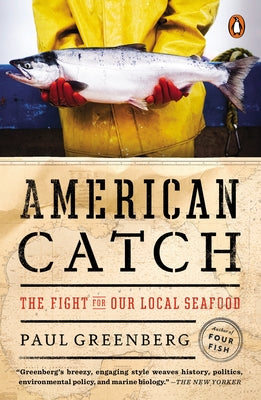
From the acclaimed author of Four Fish and The Omega Principle, Paul Greenberg uncovers the tragic unraveling of the nation's seafood supply--telling the surprising story of why Americans stopped eating from their own waters in American Catch
In 2005, the United States imported five billion pounds of seafood, nearly double what we imported twenty years earlier. Bizarrely, during that same period, our seafood exports quadrupled. American Catch examines New York oysters, Gulf shrimp, and Alaskan salmon to reveal how it came to be that 91 percent of the seafood Americans eat is foreign.
In the 1920s, the average New Yorker ate six hundred local oysters a year. Today, the only edible oysters lie outside city limits. Following the trail of environmental desecration, Greenberg comes to view the New York City oyster as a reminder of what is lost when local waters are not valued as a food source.
Farther south, a different catastrophe threatens another seafood-rich environment. When Greenberg visits the Gulf of Mexico, he arrives expecting to learn of the Deepwater Horizon oil spill's lingering effects on shrimpers, but instead finds that the more immediate threat to business comes from overseas. Asian-farmed shrimp--cheap, abundant, and a perfect vehicle for the frying and sauces Americans love--have flooded the American market.
Finally, Greenberg visits Bristol Bay, Alaska, home to the biggest wild sockeye salmon run left in the world. A pristine, productive fishery, Bristol Bay is now at great risk: The proposed Pebble Mine project could under


